
Engineering article
The tube does not end at the end, but at the connection point
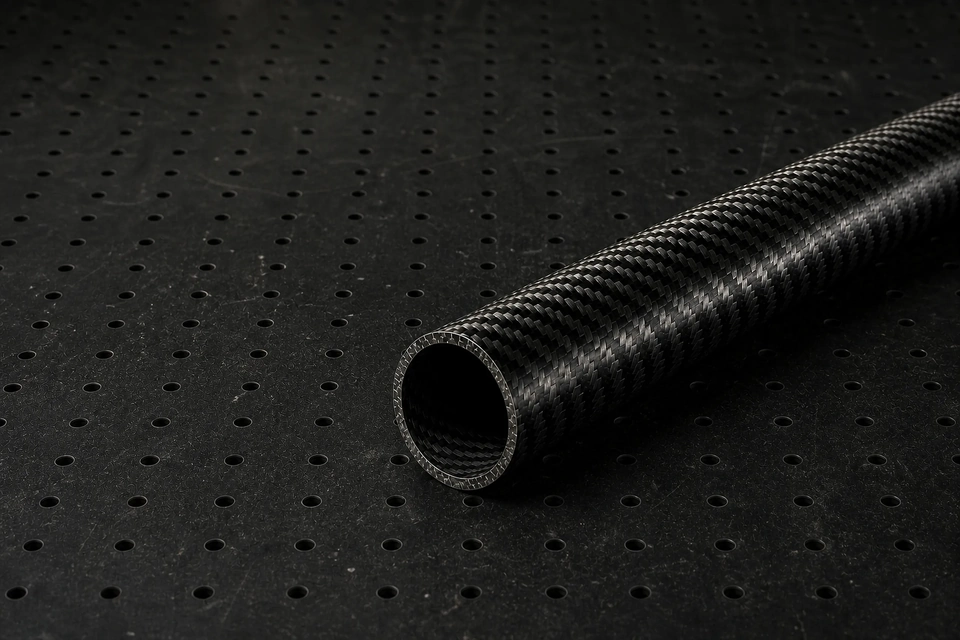
Why does the choice of a 10x8x1000 mm tube end not in the size of the blank, but in the design of the insert, surface preparation and the working length of the assembly.
The most stressed area is often at the tip
In a straight span, the tube works as a single element, but in a real product, the load must be introduced through the fastener. A glued tip, coupling or overlap transmits force between parts through a limited area of the adhesive layer. Therefore, the critical point may not be the middle of the meter-long tube, but the beginning and end of the connection. Experimental studies of adhesive joints on composite pipes compare results for specific lap geometries, layups, and surface preparations—a universal number without a description of the assembly would be misleading.
Fit and surface work together
The glue must form a continuous layer of a given thickness and reliably adhere to surfaces. A too loose fit increases clearance and makes centering more difficult; too tight may remove some of the glue during assembly. Contamination, gloss or damage to the surface will also affect adhesion. Specific preparation depends on the materials of the tube, tip and the chosen adhesive system, so it should be coordinated with the technology, and not prescribed according to general advice. A connection test sample is especially useful before production or critical use.
Outer diameter is just the beginning of geometry
The dimension 10×8 mm gives the outer and inner diameters, from which the nominal wall follows. The assembly requires additional data: the actual tolerances of the proposed batch, the length of the insert, the shape of the end and the method of fixation during curing. If the tip goes inside, the inside diameter is critical; if an external coupling is installed - external. After gluing, the useful free length becomes less than the original 1000 mm, and this should be taken into account in the product model before ordering blanks.
What to include with your handset and connection enquiry
For delivery please indicate quantity, required length, cutting capacity and intended use. For engineering verification, add a sketch of the tip, fit length, load direction and magnitude, temperature conditions, and disassembly requirements. If a hole or cross pin is planned, show it separately: such an element changes the load path. The price and availability on the page refer to the handset itself. Adhesive, surface preparation and assembly fabrication are assessed separately after obtaining geometry and operating conditions.