
Engineering article
Why is the machining of a 10 mm sheet quoted from the drawing files?
Why a thick carbon fibre sheet is quoted from the drawing files: how cut length, internal contours, tooling and edge requirements shape the process and quotation.
Thick blank changes the machining scale
In a 10 mm sheet, the tool passes through a greater number of reinforcing layers and is in contact with the material longer. This increases the value of cutting edge wear, dust removal and operating stability. It is impossible to evaluate work only by the area of the outer contour: two products of the same size can differ radically in the number of holes, the length of internal cutouts and minimum radii. It is the tool path and the resulting edge requirements that turn the file geometry into a production calculation.
Quality depends on the interaction of mode and material
Reviews of CFRP machining relate surface condition and delamination risk to cutting force, thermal conditions, tool wear, and feed. Carbon fibers are abrasive and the resin system is heat sensitive, so a sustainable process requires a consistent combination of tooling, fixture and path. This does not mean that thick sheets cannot be processed accurately. This means that the price and timing must take into account the actual technology, including tool changes, dimensional control and safe removal of composite dust.
Why STEP, DXF and PDF complement each other
STEP conveys 3D shapes, DXF is useful for flat contours, and PDF captures dimensions, tolerances, and engineering notes. For a 10 mm sheet, pocket depths, through and non-through elements, chamfers, bases and surface orientation requirements are especially important. If you only send an image, it is impossible to reliably determine the cut length and remaining walls. A complete set of files allows you to check manufacturability before preparing the quotation and identify in advance the internal radius that cannot be obtained with the selected tool.
What makes up a correct quotation?
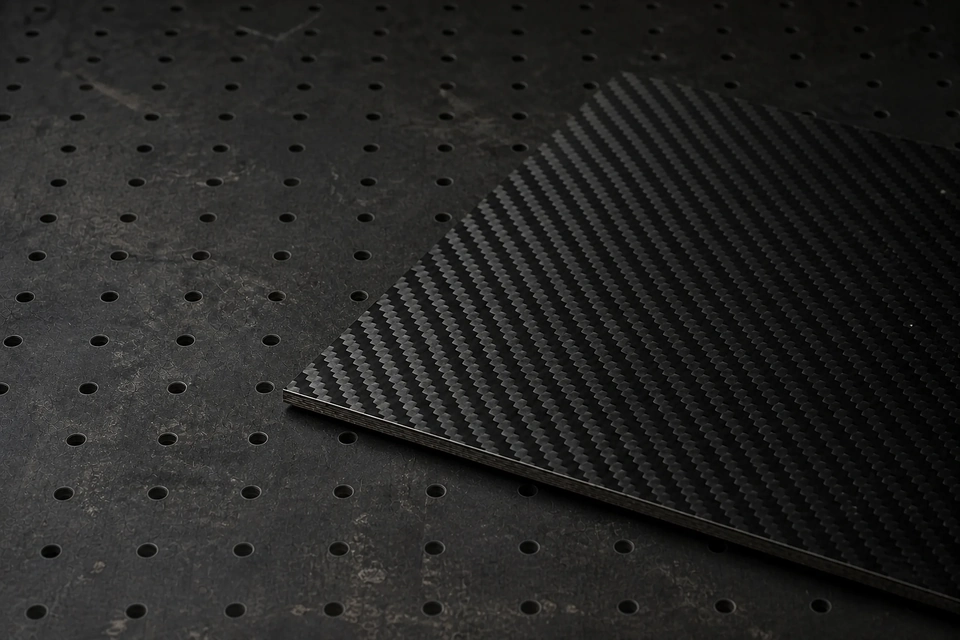
For the 10 mm sheet, the stock section shows the confirmed 500×600 mm specification. Other formats are quoted after specification, quantity and supply requirements are agreed. Machining is calculated separately from machine time, tooling, control and edge requirements. The request should distinguish a whole-sheet supply from finished-part production and state whether a data sheet or certificate is required for the batch.